
How to Buy Property in Florida, USA: A Complete Step-by-Step Guide
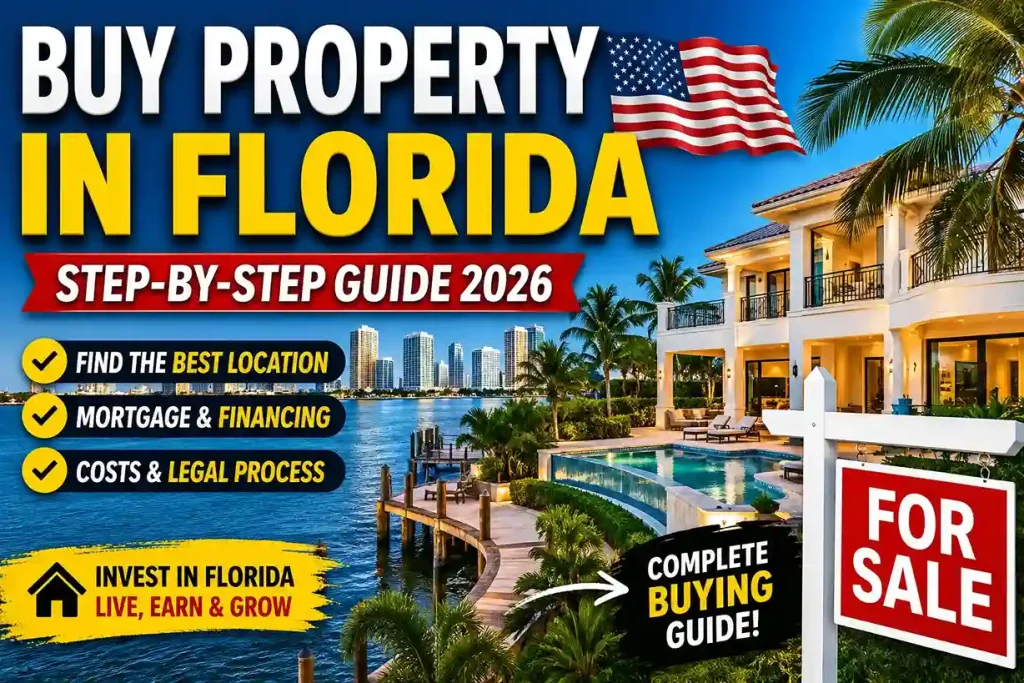
Buying property in Florida can be an excellent investment, whether you’re looking for a vacation home, rental property, or permanent residence. Florida remains one of the most popular real estate markets in the United States due to its warm climate, strong economy, and attractive tax environment.
Why Buy Property in Florida?
Florida offers several advantages for property buyers:
- No state income tax
- Strong rental and tourism market
- Growing population and economy
- Diverse property options, from condos to luxury villas
- High demand in cities like Miami, Orlando, Tampa, and Jacksonville
Many international buyers also choose Florida because foreigners can legally purchase real estate in the state without being U.S. citizens.
Step 1: Determine Your Budget
Before searching for properties, calculate:
- Down payment amount
- Monthly mortgage payments
- Property taxes
- Homeowners insurance
- HOA (Homeowners Association) fees
- Maintenance costs
Financial planning helps you avoid purchasing beyond your means.
Step 2: Choose the Right Florida Location
Different cities serve different purposes.
| City | Best For |
|---|---|
| Miami | Luxury living and international investment |
| Orlando | Vacation rentals and family homes |
| Tampa | Affordable investment opportunities |
| Jacksonville | Long-term residential growth |
| Naples | Retirement and luxury properties |
| Fort Lauderdale | Waterfront homes and rentals |
Research local property values, rental demand, and future development plans before deciding.
Step 3: Get Mortgage Pre-Approval
If you need financing, obtain a mortgage pre-approval before making offers.
Lenders typically review:
- Income
- Credit history
- Employment records
- Bank statements
- Existing debts
Foreign buyers may also qualify for specialized foreign national mortgage programs. (vickierealestate.com)
Step 4: Hire a Real Estate Agent
A licensed Florida real estate agent can help you:
- Find suitable properties
- Schedule viewings
- Negotiate prices
- Handle paperwork
- Navigate local regulations
An experienced agent can save both time and money during the buying process. (kiesslingluxuryhomes.com)
Step 5: Search for Properties
Evaluate properties based on:
- Location
- Neighborhood safety
- School districts
- Property condition
- Rental potential
- Future appreciation prospects
Never rush into a purchase without comparing multiple options.
Step 6: Make an Offer
Once you find a property, your agent will submit an offer to the seller.
The offer generally includes:
- Purchase price
- Earnest money deposit
- Financing terms
- Inspection contingency
- Closing timeline
The seller may accept, reject, or counter your offer.
Step 7: Conduct Property Inspections
A professional home inspection is essential.
Inspectors typically check:
- Roof condition
- Plumbing systems
- Electrical systems
- HVAC equipment
- Foundation issues
- Water damage
Inspection findings may allow you to negotiate repairs or price reductions.
Step 8: Perform Title Search
A title company verifies that:
- The seller legally owns the property
- No liens exist
- No ownership disputes are present
Title insurance is strongly recommended to protect your ownership rights. (Finberg Firm PLLC)
Step 9: Complete the Closing Process
During closing, you’ll sign legal documents and transfer funds.
The closing process usually includes:
- Final contract review
- Deed transfer
- Mortgage documentation
- Payment of closing costs
- Ownership registration
Florida closings are commonly handled by title companies or real estate attorneys. (pasqualepisana.com)
Understanding Closing Costs
Buyers should budget approximately 3%–5% of the property’s purchase price for closing costs. These may include:
- Title insurance
- Recording fees
- Attorney fees
- Loan fees
- Property taxes
- Documentary stamp taxes
Foreign buyers should pay special attention to tax requirements and federal regulations such as FIRPTA. (Finberg Firm PLLC)
Special Information for Foreign Buyers
Foreign nationals can legally purchase Florida real estate with ownership rights similar to U.S. citizens. A U.S. visa is generally not required solely to buy property. (realtyinorlando.com)
Common documents required may include:
- Valid passport
- Bank statements
- Proof of funds
- Tax identification number (ITIN), when applicable
- Income verification documents
Some transactions can even be completed remotely through mail-away closings or online notarization services. (sirulniklaw.com)
Common Mistakes to Avoid
Skipping the Inspection
Hidden defects can cost thousands of dollars later.
Ignoring Insurance Costs
Florida homeowners insurance can vary significantly depending on location.
Failing to Research Neighborhoods
A property’s location often determines its long-term value.
Underestimating Closing Costs
Many buyers focus only on the purchase price and forget additional expenses.
Not Working With Professionals
Experienced agents, inspectors, attorneys, and lenders help reduce risks.
Final Thoughts
Buying property in Florida is a straightforward process when you understand each step. Start by setting a budget, choosing the right location, obtaining financing, and working with experienced professionals. Whether you’re a U.S. resident or an international investor, Florida offers excellent opportunities for homeownership and real estate investment.
With proper research, due diligence, and financial planning, you can confidently purchase property in one of America’s most desirable real estate markets.