What Should You Write in a Journal? Simple Journaling Ideas for Beginners
Starting a journal often feels exciting at first. Many people buy a notebook, open the first page, and suddenly stop because one question appears immediately:
“What should I actually write?”
This is one of the most common struggles beginners face when starting journaling.
Some people believe journaling requires:
- deep thoughts
- perfect writing
- creative storytelling
- complicated systems
But in reality, journaling is much simpler.
A journal is not supposed to impress anyone.
It is simply a space to:
- think clearly
- organize thoughts
- process emotions
- reduce mental clutter
- reflect honestly
- understand yourself better
There are no perfect journal entries.
You do not need to write something profound every day.
Even simple thoughts written consistently can improve:
- mental clarity
- focus
- emotional awareness
- daily organization
In this guide, we will explore exactly what to write in a journal, especially for beginners who want a simple and practical starting point.
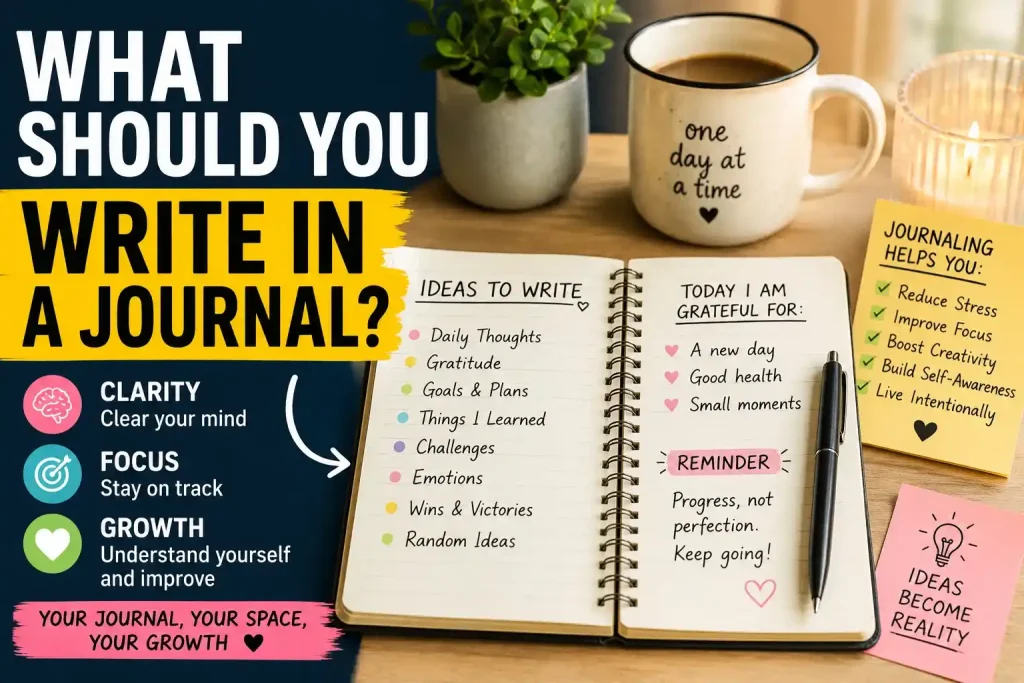
Quick Ideas: What Can You Write in a Journal?
| Journaling Idea | Purpose |
|---|---|
| Daily Thoughts | Clear mental clutter |
| Gratitude Lists | Improve positivity |
| Goals | Create direction |
| Brain Dumps | Reduce overwhelm |
| Reflections | Improve self-awareness |
| Habits | Track consistency |
| Emotions | Process feelings |
| Daily Wins | Build confidence |
| Challenges | Learn from experiences |
| Future Plans | Organize priorities |
The Truth About Journaling
Many beginners think journaling requires:
- long pages
- beautiful handwriting
- artistic layouts
- perfect routines
None of that is necessary.
Journaling works because it creates:
- awareness
- structure
- reflection
- intentional thinking
The purpose is not perfection.
The purpose is clarity.
Your journal can contain:
- messy thoughts
- unfinished ideas
- random reflections
- emotions
- goals
- questions
- worries
- plans
All of it is valid.
Why Beginners Struggle With Journaling
Most people are not used to sitting quietly with their thoughts.
Modern life keeps attention constantly distracted through:
- social media
- notifications
- multitasking
- nonstop information
When beginners finally open a journal, their mind often feels:
- blank
- overwhelmed
- distracted
- uncertain
This is normal.
The important thing is simply starting.
Over time, journaling becomes easier because writing creates mental flow naturally.
1. Write About Your Thoughts
The easiest way to start journaling is by writing whatever is currently on your mind.
This could include:
- worries
- ideas
- stress
- goals
- confusion
- excitement
- plans
- observations
Do not filter everything.
Simply write honestly.
Example:
- “I feel mentally exhausted today.”
- “I cannot focus lately.”
- “I want better routines.”
- “I feel overwhelmed with work.”
Writing thoughts down helps organize mental clutter.
Often, people feel calmer immediately after writing because the brain no longer needs to carry everything internally.
2. Write About Your Emotions
Journaling is one of the simplest ways to process emotions.
Many people suppress emotions because they never pause long enough to understand them.
Your journal can help you explore:
- anxiety
- frustration
- happiness
- gratitude
- fear
- motivation
- sadness
- excitement
Instead of ignoring emotions, journaling creates space to process them safely.
Questions you can answer:
- What am I feeling right now?
- Why do I feel this way?
- What triggered this emotion?
- What would help me feel better?
Emotional awareness improves mental clarity significantly.
3. Write About Your Day
Daily reflection is one of the most beginner-friendly journaling methods.
You can write about:
- what happened today
- lessons learned
- difficult moments
- positive experiences
- conversations
- observations
This helps build self-awareness and mindfulness.
Simple prompts:
- What went well today?
- What drained my energy?
- What made me feel calm?
- What stressed me out?
Small reflections often reveal important patterns over time.
4. Create a Brain Dump
A brain dump means writing everything currently occupying your mind without organizing it perfectly.
This can include:
- unfinished tasks
- reminders
- worries
- random thoughts
- future plans
- frustrations
Brain dumping is extremely useful when feeling:
- mentally overwhelmed
- distracted
- anxious
- emotionally overloaded
The goal is not neat writing.
The goal is mental release.
Many people use brain dump journaling before sleep or during stressful periods because it clears mental clutter quickly.
5. Write About Your Goals
Journaling can help create direction and intentional living.
You can write about:
- personal goals
- career goals
- habits
- routines
- future plans
- self-improvement
Writing goals increases awareness and accountability.
Examples:
- “I want to reduce screen time.”
- “I want healthier routines.”
- “I want more focus during work.”
- “I want to stop overthinking constantly.”
Goals become clearer when written regularly.
6. Write Gratitude Lists
Gratitude journaling helps shift attention toward positive experiences.
This does not mean ignoring problems.
It simply creates balance.
You can write:
- things you appreciate
- small positive moments
- supportive people
- daily wins
- peaceful experiences
Examples:
- good coffee in the morning
- supportive conversation
- completing a difficult task
- quiet time
- personal progress
Even small gratitude exercises can improve emotional balance over time.
7. Track Your Habits
Your journal can also function as a habit tracker.
You can monitor:
- sleep
- exercise
- focus
- productivity
- hydration
- routines
- screen time
- mood patterns
Tracking habits increases awareness because behaviors become visible.
Many people improve routines naturally once they start observing them consistently.
8. Write About Challenges
Journaling is helpful during difficult periods because writing creates perspective.
Instead of mentally replaying stressful situations repeatedly, journaling helps analyze them more calmly.
You can explore:
- what happened
- how you reacted
- what you learned
- what you would change
Reflection improves emotional resilience and decision-making.
9. Record Ideas and Inspiration
Ideas disappear quickly when they are not captured.
Your journal can become a space for:
- creative ideas
- business concepts
- observations
- inspiration
- future projects
- interesting thoughts
Many successful creators and entrepreneurs use journals as thinking tools.
Simple idea collection often becomes surprisingly valuable over time.
10. Ask Yourself Questions
Some of the best journal entries begin with questions.
Examples:
- What truly matters to me right now?
- What is draining my energy?
- What kind of life do I want?
- What habits are helping me?
- What do I need more of?
- What do I need less of?
Questions encourage deeper self-reflection and awareness.
You Do Not Need to Write Perfectly
This is extremely important for beginners.
Your journal is not:
- a school assignment
- social media content
- professional writing
It is private personal reflection.
You can:
- write messy thoughts
- skip grammar
- use bullet points
- write short sentences
- leave unfinished ideas
The journal only needs to help you think more clearly.
How Much Should You Write?
There is no required length.
Some people write:
- one paragraph
- one page
- a few bullet points
- a quick reflection
Consistency matters more than volume.
Even five minutes daily can become powerful over time.
Best Journaling Prompts for Beginners
If you feel stuck, try answering simple prompts like:
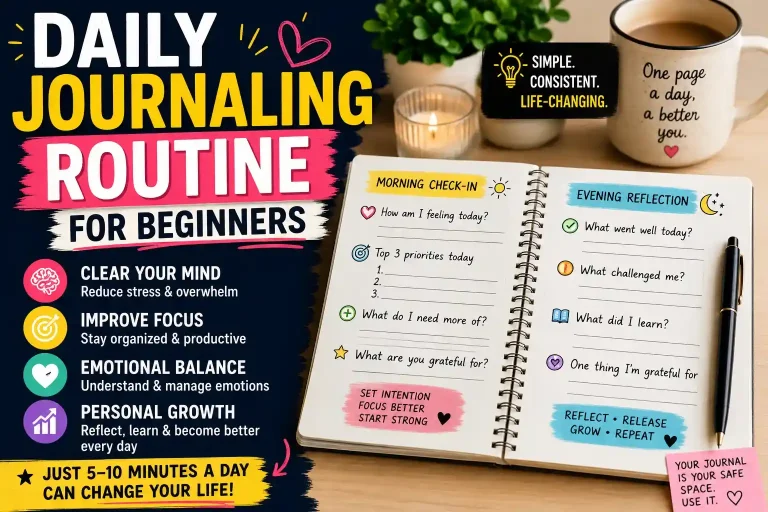
Morning Prompts
- What are my priorities today?
- How do I want to feel today?
- What deserves my attention today?
Evening Prompts
- What went well today?
- What stressed me today?
- What did I learn today?
Mental Clarity Prompts
- What is overwhelming me right now?
- What thoughts keep repeating?
- What can I let go of?
Self-Improvement Prompts
- What habit do I want to improve?
- What distracts me most?
- What would improve my life right now?
Prompts make journaling easier because they remove pressure.
Paper vs Digital Journaling
Both approaches work.
Paper Journaling
Benefits:
- calming
- slower thinking
- fewer distractions
- mindful experience
Digital Journaling
Benefits:
- convenient
- fast
- searchable
- portable
Choose whichever method feels easier to maintain consistently.
Common Beginner Mistakes
Overthinking Every Entry
Journaling should feel natural.
Trying to Write Perfectly
Honesty matters more than quality.
Comparing Journals Online
Your journal does not need to look aesthetic.
Making Journaling Too Complicated
Simple systems are usually easier to maintain long term.
Writing Only When Motivated
Consistency creates the real benefits.
How Journaling Changes Over Time
Most people start journaling with simple daily reflections.
Over time, journaling often becomes:
- clearer
- deeper
- more intentional
- more structured
As self-awareness improves, writing naturally becomes more meaningful.
The important thing is beginning before everything feels perfect.
What If You Miss a Day?
Nothing is ruined.
Journaling should support your life, not create pressure.
Simply continue again the next day.
Flexibility is important for long-term consistency.
Who Should Start Journaling?
Journaling can help almost anyone, especially:
- beginners seeking clarity
- overthinkers
- students
- busy professionals
- creators
- individuals managing stress
- people wanting better focus
- those building healthier habits
Because nearly everyone experiences mental clutter in modern life.
The Real Purpose of Journaling
At its core, journaling helps people:
- slow down
- reflect honestly
- organize thoughts
- understand emotions
- focus intentionally
- reduce overwhelm
The journal itself is not magical.
The awareness created through writing is what changes people over time.
Final Thoughts
If you are wondering what to write in a journal, the simplest answer is this:
Write about your life honestly.
Your thoughts, emotions, goals, worries, ideas, habits, and experiences all matter.
You do not need:
- perfect writing
- deep philosophical insights
- artistic layouts
- complicated systems
You only need a willingness to reflect consistently.
Over time, journaling can help create:
- mental clarity
- emotional awareness
- stronger focus
- healthier routines
- more intentional living
And often, the hardest part is simply writing the first sentence.