Everything You Need to Know About Daily Contact Lenses
If you wear glasses or contacts, you have probably heard about daily contact lenses. They are now one of the most popular choices for people who want clear vision without the hassle of cleaning solutions or storage cases. This guide covers what they are, how they work, and what you should know before switching.
What Are Daily Contact Lenses
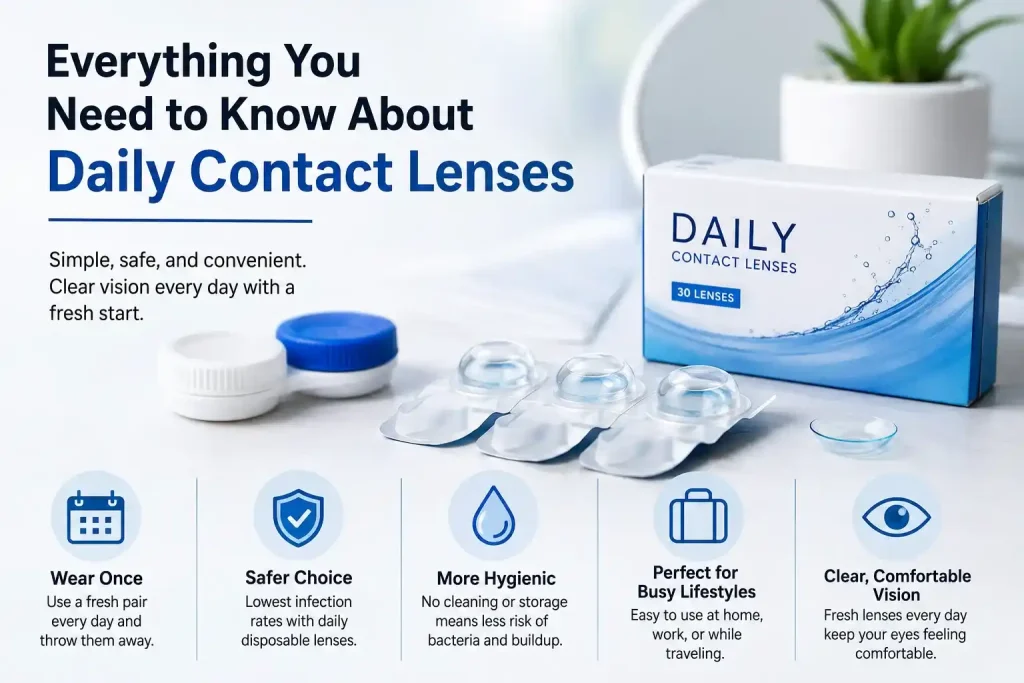
Daily contact lenses are single use lenses. You wear a fresh pair every day and throw them away at night. There is no cleaning, no soaking in solution, and no case to worry about. This makes them one of the simplest options for people who want low maintenance eye care.
They are made from soft, thin materials that let oxygen reach your eyes. This keeps your eyes comfortable and healthy throughout the day.
Why So Many People Choose Daily Contact Lenses
Daily disposable lenses have grown fast in recent years. Daily disposable soft lenses moved from around 38% of new soft fits in 2019 to a 35% to 40% share among total wearers by 2023. This shows how many people are moving away from older lens types and choosing the daily option instead.
A big reason for this shift is hygiene. Daily disposable soft lenses have the highest compliance rates among lens types, since they simplify hygiene and lower the risk of infection. Since you use a new pair each day, there is less chance for bacteria or buildup to cause problems.
Convenience plays a big part too. Many people lead busy lives and do not want to spend time cleaning lenses every night. Daily lenses fit easily into a simple routine, especially for people who travel often or have unpredictable schedules.
Are Daily Contact Lenses Safe
Daily contact lenses are considered one of the safer options when it comes to eye health. Daily disposable modalities show the lowest infection rates across soft lens categories. This is largely because there is no chance of leftover deposits or bacteria from previous wear.
That said, safety still depends on how you use them. Sleeping in lenses, wearing them too long, or skipping handwashing before insertion can increase risk. Microbial keratitis, a serious corneal infection, ranges from about 2 cases per 10,000 wearers in daily wear to as many as 20 per 10,000 in people who sleep in their lenses. This shows that overnight wear can carry a much higher risk compared to following a proper daily routine.
Always follow your eye doctor’s instructions and never reuse a lens that was meant for one day only.
Who Wears Daily Contact Lenses
Daily contact lenses appeal to a wide range of people, but some groups stand out. Around 24% of young adults aged 18 to 24 wear contact lenses, the highest percentage among all age groups, often because they prefer the look and ease compared to glasses.
Teens are also a growing group. About 14 to 15% of teens wear contact lenses, often for sports or because they simply do not want to wear glasses during activities. Vision Center
For first time wearers, daily lenses are usually the easiest starting point. They are simple to use and forgiving for anyone still learning how to insert and remove lenses properly.
Daily Contact Lenses vs Other Lens Types
Compared to monthly or biweekly lenses, daily contact lenses skip the need for cleaning solutions completely. This cuts down the daily routine and removes a common source of irritation or infection. Many people who struggle with dry eyes or sensitivity find daily lenses easier to manage since each pair starts fresh.
Monthly lenses can be more cost effective over time, but they require more care. If convenience and lower infection risk matter most to you, daily lenses are often the better fit.
Common Reasons People Stop Wearing Contact Lenses
Even with all the benefits, contact lenses are not for everyone. Discomfort is the top reason people stop wearing contacts, followed by convenience and dry eyes. Interestingly, convenience related dropout is especially common among people who switch from daily lenses back to glasses, often because they find it easier to skip the daily insertion routine altogether.
If you experience ongoing discomfort, it is worth speaking to your optometrist. Sometimes a different lens material or fit can solve the problem without giving up contacts entirely.
Tips for Wearing Daily Contact Lenses Safely
Wash your hands before touching your lenses. Avoid sleeping in them, even if they feel comfortable. Do not rinse them with tap water. Replace them on schedule and never wear a lens longer than intended, even if it looks fine. Keep a backup pair of glasses in case your eyes feel irritated and need a break.
These habits are simple, but they make a real difference in keeping your eyes healthy long term.
Final Thoughts
Daily contact lenses offer a simple, low maintenance way to see clearly without the extra steps that come with reusable lenses. They suit busy lifestyles, reduce the risk of buildup and infection, and work well for both new and experienced wearers. As always, talk to your eye care provider to find the right fit and prescription for your needs.