Interior Design DrHomey: Practical Tips to Create a Beautiful, Comfortable and Functional Home
Interior design is not only about making a room look attractive. A well-designed home should also feel comfortable, organized, practical, and easy to maintain.
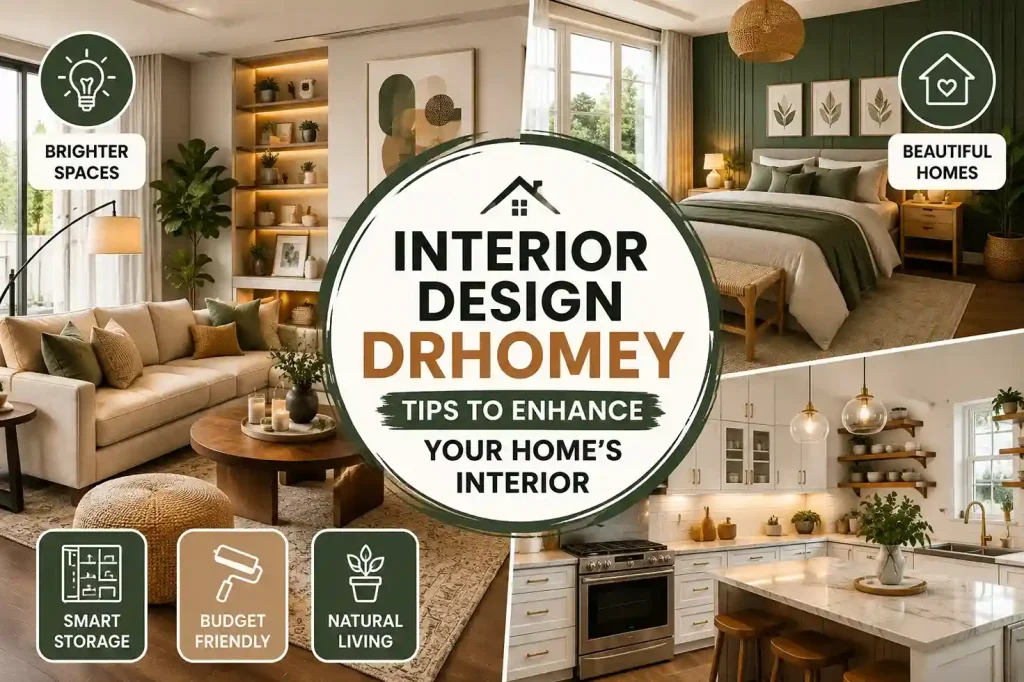
That idea is at the heart of what people often mean when searching for interior design DrHomey. The term is used online for practical home design advice that combines furniture placement, color, lighting, organization, storage, comfort, and budget-friendly improvements.
It is worth noting that DrHomey is not a formal interior design style such as Scandinavian, modern, industrial, or traditional design. Instead, current online content uses the term as a practical approach to improving everyday living spaces. (Smart Ideas for Better Living)
The best approach is simple: design your home around the way you actually live.
You do not need expensive furniture or a complete renovation. A better layout, improved lighting, the right colors, smarter storage, and a few carefully selected decorative pieces can change the entire feel of a room.
What Is Interior Design DrHomey?
Interior design DrHomey can be understood as a practical approach to creating a home that looks good while working well for everyday life.
Rather than following one strict decorating style, the approach focuses on several fundamentals:
- Functionality
- Comfort
- Organization
- Lighting
- Color
- Furniture placement
- Storage
- Personal style
- Budget
- Easy maintenance
This makes the concept suitable for many types of homes.
You can apply the same principles to a small apartment, family house, rental property, townhouse, or large modern home.
The goal is not to make your home look like a showroom.
The goal is to make it feel like your home.
Current DrHomey-related interior design content also emphasizes practical layouts, lighting, furniture selection, color coordination, and creating spaces that support everyday routines. (Rivon Home)
Why Interior Design DrHomey Is Different
Traditional decorating advice can sometimes focus heavily on appearance.
A beautiful sofa may look perfect in a photograph.
But what happens if it blocks the walkway?
A large dining table may look impressive.
But what if there is barely enough room to pull out the chairs?
A dark wall color may look dramatic online.
But what if your room receives very little natural light?
Good interior design considers these practical questions before aesthetics.
The Three Questions to Ask
Before changing any room, ask:
- How will I use this space?
- What currently makes the room difficult to use?
- What change would make the biggest difference?
These questions prevent unnecessary purchases.
They also help you prioritize improvements.
The Main Principles of Interior Design DrHomey
A successful interior usually follows a few simple principles.
1. Function Comes First
Every room needs a clear purpose.
A living room might be used for:
- Watching television
- Entertaining guests
- Reading
- Family conversations
- Playing games
A bedroom needs to support:
- Sleep
- Clothing storage
- Relaxation
- Personal routines
Your furniture should support those activities.
2. Keep the Layout Comfortable
A room can contain beautiful furniture and still feel uncomfortable.
Leave enough space for people to walk naturally.
Do not block doors, windows, heating vents, or frequently used storage areas.
3. Create Visual Balance
Balance does not mean everything needs to match.
Instead, balance the visual weight of furniture, colors, artwork, lighting, and accessories.
A large sofa on one side of a room may need a substantial chair, cabinet, artwork, or lighting feature on the opposite side.
4. Use Fewer Better Pieces
You do not need decorations on every surface.
Too many objects create visual noise.
Choose pieces that serve a purpose or genuinely add character.
Start With Function Before Decoration
One of the biggest interior design mistakes is decorating before fixing the room’s functional problems.
Imagine a living room with:
- Poor walking space
- No storage
- Bad lighting
- Too much furniture
- A television placed awkwardly
Adding decorative pillows will not solve those problems.
Start with the layout.
Remove anything that does not serve the room.
Then improve storage and lighting.
Only after that should you focus heavily on decorative details.
Measure Your Room Before Buying Furniture
Always measure your space before purchasing large furniture.
Measure:
- Room length
- Room width
- Ceiling height
- Door openings
- Window locations
- Hallways
- Stairways
- Existing furniture
Do not forget the route between the delivery entrance and the room.
A sofa might fit the room but fail to fit through the front door.
Create a Simple Floor Plan
You do not need professional software.
Draw the room on paper.
Mark:
- Doors
- Windows
- Radiators
- Electrical outlets
- Major furniture
- Walking paths
Then experiment with different layouts.
This simple step can prevent expensive mistakes.
Choose the Right Color Palette
Color has a major effect on how a room feels.
Light colors can make smaller rooms appear more open.
Dark colors can create depth and drama.
Warm neutrals can make a room feel comfortable.
Cool colors can create a calmer appearance.
The important thing is not choosing a universally “best” color.
Choose colors based on:
- Natural light
- Room size
- Furniture
- Flooring
- Ceiling height
- Personal preference
How to Use the 60-30-10 Color Rule
The 60-30-10 rule is a useful starting point for creating a balanced color scheme.
60 Percent: Dominant Color
This is usually the largest visual area.
Examples include:
- Walls
- Large rugs
- Sofa
- Major furniture
Neutral colors often work well here.
30 Percent: Secondary Color
Use the secondary color for:
- Curtains
- Accent chairs
- Cabinets
- Bedding
- Smaller furniture
10 Percent: Accent Color
This is where you can introduce stronger colors.
Examples include:
- Cushions
- Artwork
- Decorative objects
- Vases
- Lamps
- Small accessories
The formula is not a strict law.
It is simply a useful way to prevent a room from becoming visually chaotic.
Be Careful With Gray Paint
Gray remains popular, but choosing the wrong gray can produce disappointing results.
Paint colors contain undertones.
A gray can have:
- Blue undertones
- Green undertones
- Purple undertones
- Warm beige undertones
Lighting also changes how paint appears.
A color that looks neutral on a computer screen may look noticeably different on your wall.
Test Paint Before Committing
Paint a large sample directly on the wall.
Look at it:
- In the morning
- During the afternoon
- At night
- Under artificial lighting
Never choose an entire room color from a tiny digital swatch alone.
How Lighting Changes Interior Design
Lighting can completely change a room.
Even excellent furniture and paint can look poor under harsh lighting.
A well-designed room normally benefits from multiple types of light.
Ambient Lighting
This provides general illumination.
Examples include:
- Ceiling fixtures
- Chandeliers
- Recessed lights
- Large pendant lights
Task Lighting
Task lighting helps you perform specific activities.
Examples include:
- Desk lamps
- Reading lamps
- Under-cabinet kitchen lighting
- Bathroom vanity lighting
Accent Lighting
Accent lighting adds atmosphere.
Examples include:
- Wall sconces
- Picture lights
- Decorative lamps
- Shelf lighting
Combining these layers gives you more control over the room.
Make the Most of Natural Light
Natural light can make a room feel larger and more welcoming.
Keep windows as unobstructed as practical.
Consider:
- Sheer curtains
- Light-colored window treatments
- Clean windows
- Mirrors
- Reflective surfaces
- Light furniture near windows
Avoid placing large furniture directly in front of a window unless the layout requires it.
Make Small Rooms Feel Larger
You cannot physically increase the size of a small room without construction.
But you can change how large it feels.
Use Appropriate Furniture
Avoid oversized furniture that dominates the room.
Choose pieces with:
- Slim profiles
- Raised legs
- Multiple functions
- Built-in storage
Use Mirrors
A strategically positioned mirror can reflect light and create the impression of additional space.
A large mirror opposite or near a window can also increase the feeling of brightness.
Keep the Floor Visible
Furniture that allows some visible floor beneath it can make a small room feel less heavy.
Choose Furniture That Fits Your Space
Furniture should match the scale of the room.
A common mistake is buying furniture based on how it looks in a large showroom.
Showrooms are designed to make products appear attractive.
Your room has different dimensions.
Measure first.
Then compare the furniture’s dimensions with your available space.
Create Better Furniture Layouts
Do not automatically push every piece of furniture against the walls.
Depending on the room, floating furniture can create a more comfortable arrangement.
For example, a sofa can sometimes sit slightly away from the wall while creating a better conversation area.
Create Conversation Zones
In a living room, arrange seating so people can comfortably talk.
Avoid creating a layout where everyone faces the television from a great distance.
If television viewing is the main purpose, prioritize viewing angles.
If socializing is more important, create a more intimate seating arrangement.
Add Texture for Warmth
A room containing only smooth surfaces can feel flat.
Texture adds visual depth.
Try combining:
- Wood
- Linen
- Cotton
- Wool
- Jute
- Woven baskets
- Ceramic
- Metal
- Glass
For example, pair a smooth sofa with a textured rug and woven accessories.
You do not need many colors when you have interesting textures.
Declutter Without Making Your Home Feel Empty
Minimalism does not mean removing everything you own.
It means removing unnecessary visual and physical clutter.
Start with one area.
Do not attempt to reorganize the entire house in one afternoon.
Try the 15-Minute Method
Set a timer for 15 minutes.
Choose one small area:
- Junk drawer
- Bathroom cabinet
- Coffee table
- Entryway
- Pantry shelf
Work only on that area.
When the timer ends, stop or continue if you have the energy.
The important part is making the project manageable.
Smart Storage Ideas for Every Room
Storage should be designed around how you use the room.
Entryway Storage
Create a dedicated area for:
- Shoes
- Keys
- Bags
- Coats
Hooks and baskets can prevent these items from spreading throughout the house.
Living Room Storage
Consider:
- Storage ottomans
- Closed cabinets
- Built-in shelving
- Baskets
- Media consoles
Keep frequently used items accessible.
Hide items that create visual clutter.
Bedroom Storage
Use:
- Under-bed storage
- Drawer organizers
- Bedside cabinets
- Closet dividers
- Vertical shelving
Do not fill every available space.
Leave some breathing room.
Interior Design DrHomey Living Room Tips
The living room is often the most-used room in a home.
Start by identifying its primary purpose.
If it is a family room, prioritize comfortable seating.
If it is for entertaining, focus on conversation areas.
If it is a small apartment, choose furniture that can serve multiple purposes.
Improve Your Living Room With Five Changes
- Rearrange the furniture.
- Improve lighting.
- Add a properly sized rug.
- Remove unnecessary accessories.
- Add one or two meaningful decorative pieces.
You may be surprised by how different the room feels without buying new furniture.
Interior Design DrHomey Bedroom Tips
A bedroom should feel calm rather than visually demanding.
Choose a simple color palette.
Avoid excessive decoration around the bed.
Use layered lighting so you do not have to rely on a bright ceiling fixture at night.
Make the Bed the Focal Point
The bed is naturally the largest feature.
Use:
- Quality bedding
- A simple headboard
- Two or three layers of texture
- Soft bedside lighting
Keep the surrounding area organized.
Interior Design DrHomey Kitchen Tips
The kitchen needs to balance appearance and efficiency.
Store frequently used items close to where you use them.
For example:
- Cooking tools near the cooking area
- Plates near the dishwasher
- Glasses near the refrigerator
- Coffee supplies near the coffee machine
This reduces unnecessary movement.
Organize Kitchen Cabinets by Activity
Instead of organizing cabinets randomly, create zones.
Examples:
Breakfast zone: coffee, cereal, bowls and mugs.
Cooking zone: pans, utensils, spices and oils.
Baking zone: flour, sugar, measuring tools and baking equipment.
This makes the kitchen easier to use.
Interior Design DrHomey Bathroom Tips
Bathrooms benefit from simplicity.
Keep countertops relatively clear.
Use matching storage containers where practical.
Add adequate lighting around the mirror.
Choose materials that can handle moisture.
Small Bathroom Improvement Ideas
You can make a noticeable difference by:
- Replacing outdated hardware
- Improving lighting
- Adding storage
- Updating the mirror
- Replacing worn caulk
- Adding a washable rug
- Using coordinated towels
You do not always need a complete bathroom renovation.
Home Office Interior Design Tips
Home offices need to support concentration.
Start with the desk.
Position it where you have adequate light without creating screen glare.
Keep frequently used equipment nearby.
Hide unnecessary cables.
Use closed storage for documents and supplies.
A visually calm workspace can make it easier to focus.
How to Use Mirrors Correctly
Mirrors are useful, but placement matters.
A mirror can:
- Reflect natural light
- Make a room appear larger
- Highlight artwork
- Create depth
Avoid placing mirrors where they reflect something unattractive or create visual confusion.
A mirror should enhance the room rather than simply occupy an empty wall.
Plants and Natural Elements
Plants can add color and softness without requiring a complete redesign.
Choose plants based on:
- Available sunlight
- Humidity
- Maintenance requirements
- Room temperature
- Available space
If you do not want live plants, natural materials can provide a similar visual effect.
Consider:
- Wood
- Stone
- Woven materials
- Ceramic
- Natural fabrics
Budget-Friendly Interior Design Ideas
A stylish home does not require unlimited spending.
Some of the most effective improvements cost very little.
Rearrange Existing Furniture
This costs nothing.
Try several layouts before deciding.
Change Lighting
Replacing an outdated lamp or adding a floor lamp can completely change the atmosphere.
Update Hardware
New cabinet handles and drawer pulls can give older furniture a refreshed appearance.
Paint Strategically
You do not necessarily need to repaint the entire home.
An accent wall, hallway, cabinet, or small room may be enough.
Shop Your Own Home
Move artwork, lamps, cushions, rugs, and accessories between rooms.
You may already own everything needed for a fresh look.
Common Interior Design Mistakes
Buying Furniture Too Quickly
Measure first.
Choosing Trends Over Lifestyle
A trend may look great but become inconvenient.
Using Too Many Colors
A limited palette usually creates a more cohesive appearance.
Poorly Sized Rugs
A tiny rug can make an otherwise large room feel disconnected.
Hanging Artwork Too High
Artwork should relate visually to the furniture below it.
Using Only One Light Source
One ceiling fixture rarely creates the best atmosphere.
Filling Every Empty Corner
Empty space can be useful.
It gives the eye somewhere to rest.
DIY Projects Worth Doing
Some projects are suitable for homeowners with basic skills.
Examples include:
- Painting
- Replacing cabinet hardware
- Installing simple shelves
- Organizing closets
- Replacing light fixtures where appropriate and safe
- Updating trim
- Regrouting small areas
- Installing removable décor
However, electrical, structural, plumbing, gas, and major renovation work may require a qualified professional.
Do not take unnecessary risks simply to save money.
When to Hire a Professional
Professional help can be worthwhile when the project involves:
- Structural changes
- Major electrical work
- Plumbing relocation
- Load-bearing walls
- Complex lighting systems
- Large renovations
- Custom cabinetry
- Significant waterproofing
- Permit requirements
A professional can also help when you have a large budget but no clear design direction.
Interior Design Trends for 2026
Interior design in 2026 continues to move toward spaces that feel personal rather than overly staged.
Current online DrHomey-related design discussions emphasize practical layouts, warm and comfortable interiors, layered lighting, multifunctional furniture, organization, and designs that work with everyday lifestyles.
Several broader ideas are particularly useful.
Warm Neutrals
Instead of relying entirely on cold whites and cool grays, homeowners are increasingly using warmer neutrals.
Examples include:
- Beige
- Cream
- Taupe
- Warm white
- Soft brown
- Muted earthy colors
Multifunctional Furniture
Furniture increasingly needs to perform more than one job.
Examples include:
- Storage benches
- Sofa beds
- Extendable dining tables
- Ottomans with storage
- Foldable desks
This is especially useful in smaller homes.
Layered Lighting
Instead of depending on a single ceiling fixture, modern rooms increasingly use multiple lighting sources.
This improves both function and atmosphere.
Personal Interiors
A home does not need to look like a showroom.
Family photographs, books, artwork, travel objects, handmade pieces, and meaningful possessions can make a space feel personal.
How to Create a Complete Home Design Plan
If your entire house needs improvement, do not start everywhere at once.
Use a room-by-room plan.
Step 1: Identify the Biggest Problem
Which room bothers you most?
Start there.
Step 2: Define the Room’s Purpose
Write down the activities that happen in the room.
Step 3: Measure Everything
Record room dimensions and furniture measurements.
Step 4: Fix the Layout
Move furniture before buying anything.
Step 5: Choose Your Color Palette
Select a dominant, secondary, and accent color.
Step 6: Improve Lighting
Add ambient, task, and accent lighting where needed.
Step 7: Improve Storage
Remove clutter and give frequently used objects dedicated locations.
Step 8: Add Texture
Introduce rugs, curtains, cushions, wood, plants, or woven materials.
Step 9: Add Personality
Finish with artwork and objects that actually mean something to you.
Step 10: Stop Before Overdecorating
Once the room feels balanced, stop adding things.
More decoration does not automatically mean better design.
Is Interior Design DrHomey a Specific Design Style?
No. The term is better understood as a practical approach to home design rather than a formal style category.
It can incorporate modern, minimalist, traditional, Scandinavian, contemporary, industrial, or other design influences.
Is Interior Design DrHomey Expensive?
It does not have to be.
Many useful improvements involve rearranging furniture, improving organization, changing lighting, painting, and removing clutter.
More expensive renovations are optional.
What Is the Best First Interior Design Improvement?
Start with the problem that affects your daily life most.
If the room is dark, improve lighting.
If it is cluttered, improve storage.
If it feels cramped, change the furniture layout.
If it feels cold, add texture and warmer colors.
How Can I Make My Home Look Better Without Buying New Furniture?
Start by removing unnecessary objects.
Then rearrange the furniture.
Clean windows.
Improve lighting.
Move artwork.
Add plants.
Change cushions or throws.
Sometimes the best interior design upgrade is simply using what you already own more effectively.
What Colors Work Best for a Small Room?
There is no single correct answer.
Light and moderately reflective colors can help a small room feel more open, but darker colors can also work when used intentionally.
The amount and direction of natural light should influence the decision.
How Do I Make My Home Feel More Expensive?
Focus on quality and proportion rather than expensive labels.
Useful improvements include:
- Properly sized rugs
- Consistent hardware
- Good lighting
- Coordinated colors
- Quality curtains
- Fewer decorative objects
- Natural materials
- Clean lines
- Good maintenance
A well-organized $2,000 room can look more sophisticated than a poorly planned $20,000 room.
Final Thoughts
Interior design DrHomey is best approached as a practical way to make your home more comfortable, functional, organized, and visually appealing.
You do not need to redesign everything at once.
Start with one room.
Measure it.
Understand how you use it.
Fix the layout.
Improve the lighting.
Choose a simple color palette.
Remove unnecessary clutter.
Then add texture, plants, artwork, and personal details.
The strongest interior design is not necessarily the most expensive or fashionable. It is the design that makes everyday life easier while still making you happy when you walk through the door.
A beautiful home should work for the people who live in it.